In this week’s post, guest Ivana Care reflects on how unconscious beliefs and people pleasing patterns shaped her relationships and sense of self. She shares how learning to listen to her body, sit with discomfort, and question old narratives opened the door to emotional freedom and more conscious choice.

march 5, 2026
I used to take pride in being the person everyone could count on. I didn't realize I was slowly erasing myself in the process.
“Until you make the unconscious conscious, it will direct your life and you will call it fate.” — Carl Jung.
Let's unpack this beautiful quote together. I love it because it gives us power—an agency over our lives. If we pay attention to our unconscious, we will gain the freedom to create freely.
But how do you uncover thoughts and beliefs that are so deep we've stopped noticing them?
They are very hard to spot with awareness alone. They become our blind spots; they become our reality. They become the way we see the world, and what is reflected back to us as situations and circumstances.
I had a couple of those deeply rooted inside:
- There is fundamentally something wrong with me, no matter what I do.
- My needs are not as important as others'.
- When they are okay, I feel okay. When they are not okay, I have to fix it.
Now those lies are in the light. But when they were not, when they were running my life… Oh boy, I was in constant stress. I developed a very sensitive sense to spot other people's moods quite effectively. I could regulate them, distract them, soothe them before they even knew it. Natural caretaker from the age of 10.
But one day the lies started to crumble.
The perfect world in which I could fix and heal people in exchange for love and acceptance literally stopped working. I got caught up in a relationship where I was giving and caring to my complete exhaustion and still felt unseen, unheard, and unloved. And I thought it was him who was just "too big of a challenge for me." And then I got caught up in the same type of relationship again. And I left. Broken, worthless, disappointed, and totally numb. I literally lost the sense of who I was. I couldn't feel my body or my emotions, and I didn’t know who I was.
That's when I knew I had to change everything radically.
Those three lies were the most important pieces of information I found on my healing journey.
But the funny thing is, they weren't hidden. In fact, those were my frustrations for years, and those thoughts were so loud and so intrusive that I created walls around them. Walls like "Don't make anyone upset." "Don't complain." "Don't say you don't like it, that's rude." Other times, I was bending myself backwards and shrinking myself, so I didn't hear the inner discomfort—the battle between my needs and theirs, or the discomfort of feeling like I was doing everything wrong. It sounded a bit like "It's not that bad." "I should be grateful for what I have." "Maybe I'm overreacting." "I need to be more flexible/understanding/patient."
These thoughts are sneakier than the "don't complain" walls because they feel like self-awareness or maturity, when really, they were just another way of abandoning myself. They convinced me that the discomfort was the problem, rather than a signal that someone was crossing my boundaries.
So how do you outsmart these clever ways your brain tries to protect you? And how do you break the habit of questioning yourself first before you question others?
You have to listen to your body, not your mind. You have to learn how to feel the sensations of your emotions inside your hands, stomach, jaw, and shoulders. Those sensations are signals of when you're stressed and when you're calm. They are your compass.
I started to notice the moments when I automatically reached to fix someone else's discomfort while ignoring my own. I began to practice sitting with that urge instead of acting on it. I learned to ask myself: "Is this an impulse or a conscious choice?"
Practical example: In the past, I could not stand the feeling of guilt. In other words, I would avoid it at any cost. Guilt is one way people can become easy to manipulate, and the other party becomes aware of this (consciously or unconsciously). "Oh… but I was really looking forward to that. I'm sure you wouldn't cancel if you knew how much I want to see you," he says.
Or this one: "I had a really rough day, and I really need you right now. I know you said you needed some alone time tonight, but… I guess I'll just deal with it on my own. Don't worry about me."
Can you quietly sit with your sense of guilt? Can you create enough space to feel that you have a choice?
If you are on a healing path from people pleasing yourself, I want to share with you 3 important steps that helped me to spot it and move away from those invisible ties towards emotional freedom.
Firstly, here is the fact: No one has the right to make you feel small, foolish, guilty, or scared.
Step 1: Develop a sensitivity to those types of situations. Just notice how you feel inside when you hear an ultimatum, a compliment that is not flattering or a joke that is not funny. At this stage, just notice, don’t judge, don’t try to understand why or defend etc. But get good at noticing.
Secondly, another important fact: We are all equal. There is no one who is born less lovable. Love is not earned. Love is not limited. Love is for everyone all the time.
Step 2: Practice self-love and self-compassion. Your ability to feel love, to be loved, to love yourself cannot be taken away from you. Notice how this resonates. If you notice that for some reason you feel less than others, or less fortunate or that there is something wrong with you. It’s not because it’s true, it’s because between you and your love for you lies an old wound, trauma or a myth. This can be removed. You can heal this, or you can ask for help.
Lastly, fact: Emotions are not problems to fix. They are signals to listen to.
Step 3: Get comfortable with the discomfort in your own body—especially fear, guilt, and shame. You can start really small by feeling into the sensations, or work with a qualified practitioner. Over time, you will expand your capacity to feel more discomfort in your body and stand stronger during a conflict. Emotions will run your life if you let them. But freedom is learning to feel the emotion fully, let it move through you, and then make your choice from clarity.
Emotional freedom doesn't mean I never feel guilt or fear anymore.
It means I can feel those emotions without letting them control my decisions. It means I can witness someone's disappointment without making it my emergency. It means I can say "no" and sit with the discomfort that follows, knowing I'm not responsible for managing their reaction. It means choosing myself isn't selfish—it's necessary. That's the freedom: not the absence of difficult emotions, but the ability to feel them and still honour my own needs.
The greatest gift of this journey has been discovering that I am worthy of love and acceptance, not because I make everything okay for everyone else, but simply because I exist.
My needs matter. My feelings matter. And the right people will love me not for how well I manage their emotions, but for who I authentically am.
If you're reading this and something resonates, I invite you to get curious about your own unconscious beliefs.
What thoughts have you been believing for so long that they've become invisible? What walls have you built to protect yourself from uncomfortable truths? What patterns keep repeating in your life, trying to show you something you haven't yet been willing to see?
The answers might be uncomfortable. They might shake the foundation of who you thought you were. But on the other side of that discomfort is freedom—the freedom to choose which thoughts you believe, and which ones you finally let go.
By Ivana Care
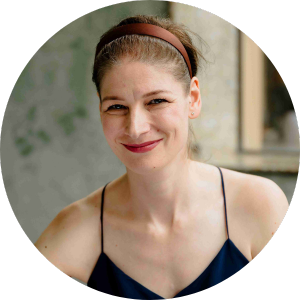
Ivana Care is a Life and Transformation Coach supporting women to rediscover themselves after painful relationships. She blends embodied, trauma-informed healing, guided meditation, and energy work, always honouring each woman’s inner world. Her approach nurtures confidence, emotional freedom, and a deep sense of inner peace. https://ivanacare.com/